


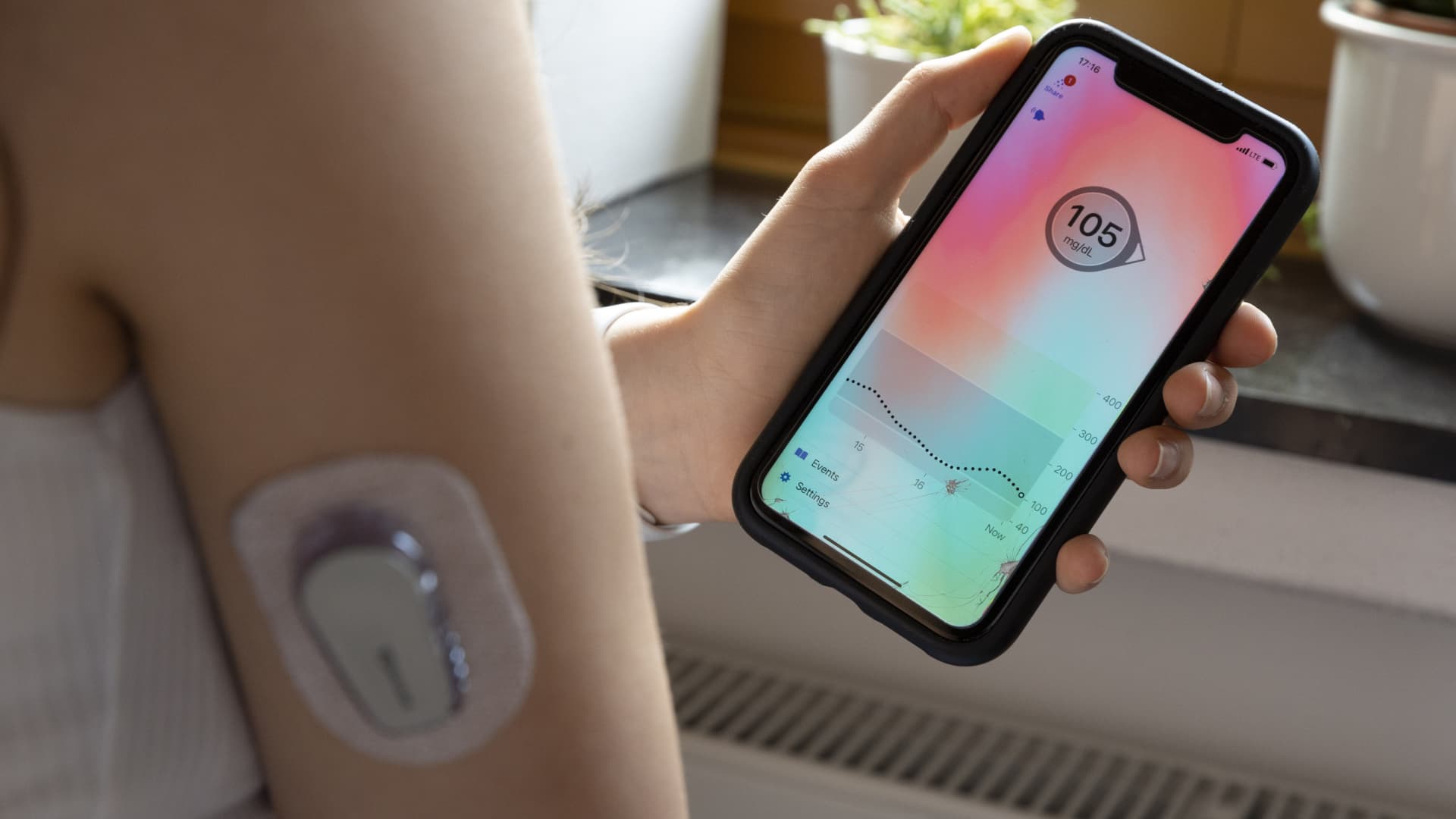
A blood glucose control system with the help of a smartphone and a meter that is fixed to the skin.
Ute Grabowsky | Photothek | Getty Images
The internet of things to remote monitor and manage common health issues has been growing steadily, led by diabetes patients.
About one out of every 10 Americans, or 37 million people, are living with diabetes. Devices such as insulin pumps, which go back decades, and continuous glucose monitors, which monitor blood sugar levels 24/7, are increasingly connected to smartphones via Bluetooth. The increased connectivity comes with many benefits. People with type 1 diabetes can have much tighter control over their blood sugar levels because they’re able to review weeks of blood sugar and insulin dosing data, making it easier to spot trends and fine-tune dosing. In recent years, diabetes patient became so adept at remote monitoring that a DIY community of patient-hackers manipulated devices to better manage their medical needs, and the medical device industry has learned from them.
But the ability to monitor medical conditions over the internet comes with risks, including nefarious hacking. Though medical devices, which must go through FDA…


